We know that therapists often carry a strong trauma charge of their own. Sometimes therapists who are capable of beautiful and holding work still live in chaos. That was me once, before I learned self-care skills and realised that my procrastination was a form of self-harm and I deserved better. In parallel with my client work and championing of their recovery, I gradually learned to open my post, go to bed before midnight, eat breakfast and brush my teeth. It took time, but I got there. I am comfortable saying I have experienced periods of historic depression. It’s ok for me to say there was chaos in my past. It’s ok for me to say I have had my share of conquered addictions. Overcoming these challenges has given my self-esteem a truly large boost.
For the past decade and a half, I have had a deeply blessed and broadly happy life, with great mental health. I carry weighty responsibility for others, as well as myself. I consider myself as high-functioning and it is incredible how much I can get done. Sometimes I intimidate my family with insane productivity. I have many hobbies and I love fiercely, deeply and easily. Conflict is rare and I would say that I approve of and love myself. I consider myself to be as well-rounded a human that 25 years living around a therapy world can make anyone.
Did the training make me realise I may have lived with undiagnosed ADHD for years?
(Oh, I still don’t want to admit that to myself! It feels so shudderingly uncomfortable.)
I had an interesting conversation with a fellow therapist recently about the need in our society to use labels. They weren’t sure how they were feeling about the prevalence of neurodiverse labels and wished that we didn’t need them for self-identification. I knew from my recent Certificate in ADHD+ that statistically there is an under-diagnosed population out there. I know this lack of diagnosis is particularly prevalent in women, who are often extremely adept at masking. As two therapists in conversation, we both knew that anything that helps reduce shame in people, (e.g. understanding that behaviours are symptoms of a neurodivergence and not “weakness”/“character failings”), is to be supported. However, a resistance was being noticed that interested me.
Personally, I passionately believe in acknowledging Difference and naming it is important. A Difference I have a lot of personal connections with is Deafness. I know for example that a D/deaf person can never be “Hearing” and the world has not been made to support their difference. Khalil Gibran says, (of children),
“Strive not to make them like you, strive to be like them”.
If the hearing world learned some sign language and we increased inclusivity, the world would be a better place for everyone. And of course, we can find myriad examples of the pain of difference denial when it comes to sexuality and race.
What about difficulties acknowledging my own Difference?
It’s the internalised stuff that we carry that is truly interesting. I am broadly an optimistic person. I perhaps view my childhood through a warmer lens than my siblings. I trust my body to fight off illness and to be strong and capable. I feel vigorous and robust. I get things done.
On the last day of training, I found myself in a peer conversation exploring Compulsivity behaviours found in ADHD. Someone with a relatively recent diagnosis, she asked: “Do you have ADHD then?” “Oh no!” I replied. “I would possibly have met the threshold when I was younger, but not now. My self care is so good”. I believed myself.
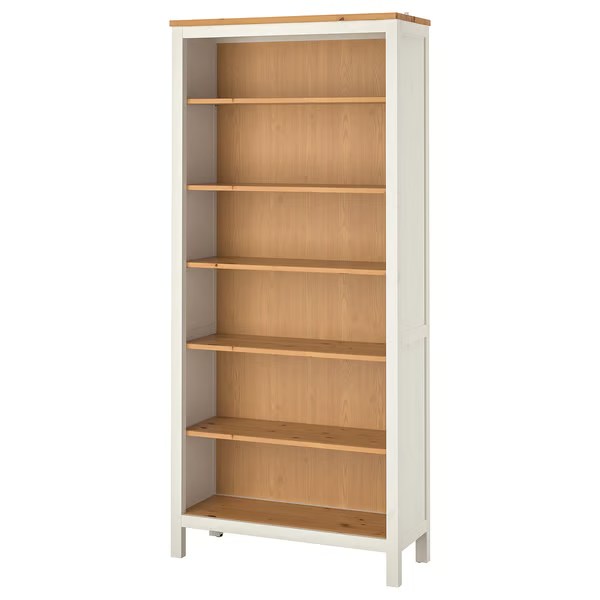
We decided to draw from our own material, so I talked about the “problem” that was repetitively going around my head for about 6 months – buying bookshelves for the bedroom. I described how solving this problem impacted multiple rooms in the house, and would also involve moving things to the attic and repainting a partially painted second bedroom.
I gave another example: last year a defined project for a new upstairs bathroom involved months of additional unplanned building work: a new kitchen, two new bathrooms and a new back door. Even now months later, there are three areas of the house still not quite finished, (classic Hannah there!). My colleague laughed and told me about getting ALL the carpets in her entire house laid on the same day.
“You do know that all of this is symptomatic of ADHD though?”
It was said gently and with compassion – but I found it totally clashed with my version of myself being the most “sane” and competent person I know. “I am on top of things!” I thought. “I’m just not good at making decisions!”
Unusually for me, I have been laid down with a cold, forcing me to slow down physically (well, no – I still spent 2 hours digging out a pond bog yesterday and then only half finishing the cleaning up afterwards). I feel restless after the ADHD course. It’s a familiar feeling when I am not obsessively absorbed in my clinical work or a project. My brain relentlessly tells me all of these things I want to do at once. With my raging cold, my face won’t stop streaming long enough to do any of them.
I’ve been grumbling in my illness and listed out loud all the things I wanted to do today (but can’t) to two members of my family. As my list got longer and longer, with a twinkle one of them mouthed “ADHD!” at me. I rolled my eyes. I continued to ignore that possibility – because I don’t want that possibility. I lay in the bath and decided I would prove I didn’t have ADHD. But I began listing the signs on my phone and looking deeply at myself. I paused my resistance.
Here is the irony: this therapist deliberately never looked at the symptom lists or common struggles against her own behaviour.
I resisted because I don’t want to have ADHD.
But my poorly, restless energy is hard to contain today and hurts me. So I think “Sod it, do it Hannah: map yourself here: what do you have to lose?”
I let in the idea that I didn’t want to hear. I started a list:
At primary school they bought in eye, hearing, speech and language tests because I was so dreamy. I didn’t copy things down from the board. They were worried I had a huge cognitive deficit. They found there was nothing “wrong” with Hannah.
In early secondary school, I used to be told off for singing in class. It always surprised me, because I had no idea I was making any noise.
I bit my nails. Before bed I pulled out my own hair and pulled strands tight by my ear so I could run my finger over them like a musical instrument, because it soothed me. Any soft garment I can pull fibres from still gets the same treatment.
My parents called me the “Wild Hannabee” because I would jump around so much: “She’s turning upside down again!” and because I would go outside and hang from trees.
All my essays got done beyond the last hour; especially at Uni. I couldn’t work without the pressure. I wouldn’t have read any of my books if it weren’t for reading in the bath. I still have an outstanding essay as I write this.
A depressed and demoralised English student, I once read about 200 Mills and Boon books in a row, because I felt so overwhelmed and couldn’t leave my room. I hated the books, knew the plots, but felt comforted by their predictability.
In youth, I couldn’t go to bed early – and I couldn’t wake early either. 2am was an early night. Joining the world of work was hideous. I was chronically tired into my 30s.
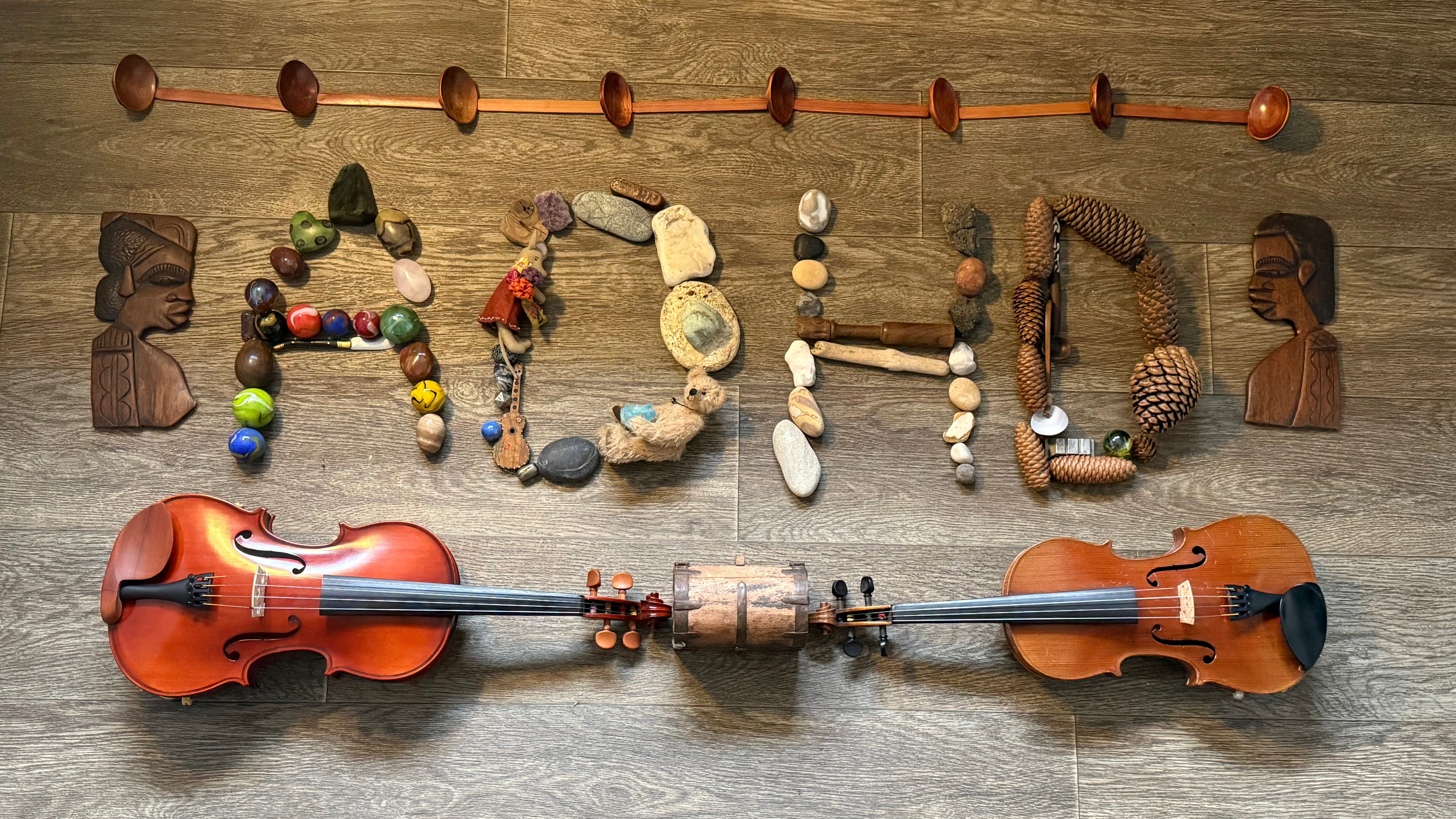
Then there has been a lifetime history of gathering “stuff”, from odd stones, to every letter anyone has ever written to me. Every relic has a meaning and a memory. It doesn’t have to have a monetary value: I love some pretty bizarre items of family history, including my grandmother’s school pencil sharpener. My attic is crammed with stuff I don’t want to let go of – and yet it oppresses me to have so much stuff everywhere. I love the idea of minimalism. I just can’t cope with the journey to get there.
Every day of my life, I make at least one cup of tea that I forget to drink. It often takes three attempts to get the washing in the machine and turn it on. I find managing clothes oppressive, so I don’t have lots of them deliberately. I can do huge amounts of chores effectively – but always in circles, with three tasks ongoing simultaneously.
When I am working, I can totally disappear into the lives and stories I hear, recalling them with incredible clarity. I almost don’t get tired, even when working in excess of the standard 8 hour day. So much is remembered in detail: yet I cannot remember the names of my children’s teachers and sometimes even the names of their friends.
If you ask me what I am thinking, there will be three answers I could give. If you ask me what I am doing, often it’s four interlinked things. I forget to put the vacuum away – but when I clean, I am a perfectionist.
And with perimenopause, I seem to be waking up and having bursts of hyperactive creativity at night. An extra 2/3 hours work happens at 2am because there is just too much going on in my brain for the daytime. This doesn’t even seem to tire me.
I rarely know where my wallet is – so much so that I don’t worry at all when I can’t find it. It will turn up. Even so, I order at least one or two new bank cards every year. I lose my keys constantly. I lose objects repeatedly. I have arrived to hold a therapy session wearing two pairs of glasses on my head at once, whilst reaching for the third pair of readers on the desk.
Unless it is for work, I am slightly late – or struggle to be on time for EVERYTHING.
Silence is wonderful. However, once I start talking about something, my verbosity is something else. I can talk about anything for hours. Often quite eloquently, with elaborate threads and incredible detail – but it can mean people get a bit overwhelmed or lost.
I don’t enjoy social groups of more than three people. I realised I was late picking my daughter up from school for her entire primary school life to avoid chit chat. When I am forced into it though, no-one would ever think there was a social deficiency, because I appear so good at it. Afterwards though, it totally drains me to be with lots of people, especially women of the same age.
I am allergic to self-failure, so the amount of effort I put into something to avoid failure is monumental. I still struggle with people pleasing, all these years on from training and after my own therapy. I find it hard to say no.
My husband is deaf in one ear and if I accidentally make him jump when I am coming up on the wrong side for affection, my nervous system interprets it as rejection, and I sometimes burst into unbidden tears. It is shockingly painful, even whilst I know there is no animosity or unkindness.
And when I am on my own (which I love), I will talk and stim to myself hugely – in voices, in gestures, in swaying.
I fidget. Working online was a great relief because I could play with all sorts of objects under the camera line to help me concentrate.
And that concentration? Sometimes I am mind blown by how amazing it can be. Hours and hours and I am not bored.
But I will have forgotten or delayed going to the toilet. I will have forgotten to look in the mirror or check I have eaten. My t-shirt might be inside out.
I love a notebook. I like to write things down. I only finish notebooks for work. The others just gather as objects I could never throw away, even if I only wrote in them once.
Wow. The list is long Han – and this is just the beginning. Shit: I’m starting to realise I probably do have incredibly well-masked ADHD. And the resistance is palpable – but I think finally I might be able to stop avoiding this probability. It doesn’t mean I have changed because of a label. It doesn’t make me anything less. Maybe it makes sense of why I have achieved so much. Maybe that is why I am so creative.
The Conclusion:
Next weekend, I am just going to go and buy those bloody bookshelves for the bedroom and get rid of that one frustration from the list. And if I stay open, maybe this is a label I can learn to integrate and love.
 Sometimes, Trauma...
Leave a comment